

Intersections
The Garden Between Us
INTERSECTIONS is a multi‑medium exhibition—oil, acrylic, stained glass, and video—exploring how human wellbeing, wildlife vitality, and environmental health are inseparable in the living theater of our gardens. Guided by the principles of One Health, the show presents gardens as habitat, classroom, and care practice. The interpretive arc follows a triad that mirrors how many people come to nature: we feel an innate pull toward living things (Affinity), we experience steadiness and meaning through tending (Healing), and we choose to give back to complete the relationship (Reciprocity). Works highlight host‑plant fidelity, seasonal nectar bridges, predator–pollinator balance, and cultural traditions carried through seeds, thresholds, and shared tending. The exhibition invites visitors to notice what their lives depend on—and to practice care that supports people, wildlife, and place.
(WARNING - This art series is in early stages of planning. The images and descriptions listed below are not the final product but placeholders during production. This webpage is published only to share with others for comment. If you have thoughts you would like to share after reading this, please email me - I would love to hear from you.)

Series Outline
-
Affinity — Why we are drawn to life
-
Chapter 1: Pollinator Pathways — co‑flowering diversity, host plants, nectar flows that attract and sustain insects and birds.
-
Chapter 2: Predators in the Petals — spiders, lacewings, and other allies as the hidden choreography of balance.
-
Chapter 3: Cultivated, Not Tamed — dialogues between native species and thoughtfully chosen garden plants, bridging seasonal gaps in forage and habitat.
-
-
Healing — What tending does within us
-
Chapter 4: Garden Medicines — bergamont, roses, catmints - plants for everyone
-
Chapter 5: Tending the Living World — rituals of sowing, weeding, watering, resting; attention as care. Creating early sensory bonds and learning through hands‑on care.
-
-
-
Reciprocity — How we give back to complete the relationship
-
Chapter 6: Roots & Rituals — cultural memory, seasonal ceremonies, seed‑saving, thresholds, and community tending as acts of return.
-
the experiential arc moves visitors through Instinct → Experience → Ethic
…mirrors how people often come to gardens.
This ordering mirrors the garden itself:
Attraction → Attention → Care.
Affinity
Biophilia — The Pull Toward Life
Humans are drawn to living things. The colors of petals, the movement of pollinators, the patterns of foliage, and the vibrancy of biodiversity activate a deep, evolutionary recognition. This opening chapter invites visitors to follow that pull — to notice co‑flowering abundance, hidden predators, and the dynamic relationships that animate a garden. Through the lens of biophilia, gardens become places where wonder is the doorway into stewardship. By beginning with attraction and curiosity, we meet the living world with the openness required for deeper learning, humility, and care.
Recommended reading: Biophilia (Edward O. Wilson) - innate attraction to living systems; wonder, curiosity, and recognition as the doorway to stewardship.
Affinity
Chapter 1: Pollinator Pathways
Co‑flowering displays, host plants, and nectar flows shape the intricate routes insects depend on. This section highlights blooming relationships across seasons: the specialists that rely on specific host plants, and the generalists that forage widely through changing gardenscapes. Visitors encounter color, pattern, and movement as expressions of ecological choreography. The artworks invite viewers to consider how even small planting choices can create lifelines for bees, butterflies, and other pollinators whose health is deeply intertwined with our own.
Icons: 🧑🤝🧑 🐝 🌎 🌱

Jill-in the pulpit and gnat
Pollinator specificity
Pollinated by fungus gnats that fall into the flower, Male plants allow escape through a hole in the flower. The female plant - Jill - does not have this escape hatch built in, and is a rare Femme-fetal of the plant world (learn more here).
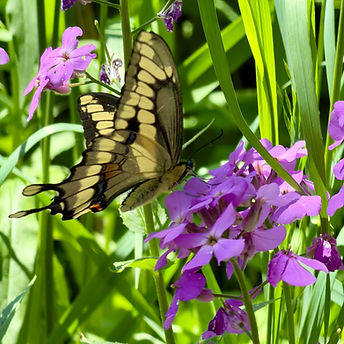
Giant Swallow tail and Sweet Rocket...
Host plants
butterflies specialize and lay eggs on few plants - we can prioritise host plants in our gardens

Chicadee and caterpillar on Maple
host plants as important food sources for birds
Maple trees are host plants to a diversity of caterpillars that feed the baby birds in your yard.
Affinity
Chapter 2: Predators in the Petals
Spiders, lacewings, beetles, and wasps animate an unseen but essential drama within the garden. This section uncovers the quiet predation that stabilizes food webs and protects blooms from imbalance. Through macro‑level attention, visitors see camouflage, patience, and adaptation as forms of ecological intelligence. These predators are not threats but allies — part of the subtle choreography that supports pollinator abundance and plant health.
Icons: 🐝 🌎 🕷️

spider in peony
Pollinator predators
A pale crab spider (family Thomisidae) waits within a white bloom near yellow pollen, nearly invisible against the petal. This quiet hunter is a stabilizer, not a villain—part of the choreography that checks herbivores and supports the nectar economy. Predators, pollinators, and plants form feedback loops that keep bloomscapes resilient. Look for camouflage, ambush, and patience in your own garden; making space for these allies helps the whole web hold together.

lacewing on thistle
Friendly pest control
-
nocturnal allies controlling aphids.

dragonfly and blackeyed susan
Perching for ambush attacks
description to come
Affinity
Chapter 3: Cultivated, Not Tamed
Gardens blend the designed and the wild. Here, native species coexist with thoughtfully chosen garden plants that extend nectar and pollen availability across seasons. This section emphasizes the partnerships that arise when human intention supports ecological need. Visitors learn how cultivated spaces can still host specialist insects, support biodiversity, and offer refuge — proving that care and design can deepen, rather than diminish, ecological function.
Icons: 🧑🤝🧑 🐝 🌎 🌱

blood root in the garden
Non-native early spring nectar plants
description to come

Echinacea and Honey Bee
Seasonal Nectar Bridge
description

Asters and Goldenrod
Native plants for gardens and wildlife
description

butterfly on merigold
companion plants for vegetable gardens
Description
Healing
The Well Gardened Mind — Attention, Rhythm, Renewal
Gardens steady us. Through repetition and seasonal rhythm, tending restores focus and calms the mind. This chapter explores how kneeling close to the ground, watering, weeding, and observing cycles of growth and decay mirror emotional processes. In these quiet gestures, visitors encounter the therapeutic dimension of horticulture: the way presence becomes care, and how small acts of noticing give shape to resilience. This is where connection becomes internal — a felt sense of belonging, patience, and rootedness.
Recommended reading: The Well‑Gardened Mind (Sue Stuart‑Smith): tending restores attention and mood; cycles of growth and renewal mirror psychological healing; shared gardens build belonging.
Healing
Chapter 4: Garden Medicine
Across cultures and generations, gardens have been places where plants teach healing. This section highlights species traditionally used for nourishment, support, and care—whether as teas, salves, aromatic allies, or symbolic restoratives. Through depictions of medicinal herbs, leaves, and blooms, visitors encounter plants as companions in wellness and as knowledge carriers within families and communities. This chapter bridges botanical science with cultural practice, showing how tending medicinal plants nurtures both the body and the broader ecological web they depend on.
Icons: 🧑🤝🧑 🌎 🌱


Milkweed and clear wings
Milkweed - cultural medicine and nectar plant - more than for monarchs

Mountain mints
medicinal edibles
description
Healing
Chapter 5: Tending the Living World
This section explores how tending—watering, kneeling, observing, and returning—creates healing relationships between people and the living world. From early childhood encounters with soil and blooms to the slow, attentive rituals of adult care, these gestures anchor the body in cyclical time. Close-up florals, early-season emerging plants, and hand-level interactions invite viewers to consider how small acts of tending regulate attention, support emotional balance, and build a lifelong language of connection. Here, healing is both quiet practice and reciprocal presence.
Icons: 🧑🤝🧑 🌎

garden violet
slow observation
The painting brings the eye down to the soil, where a violet’s purple petals and veined leaves share cool shade with moss and leaf‑crumbs. This perspective slows perception: textures, moisture, and light gradients become visible. The work honors micro‑ecologies—places where pollinators sip, seeds rest, and soil life thrives. Kneeling to notice is its own practice of care. In a small radius of earth, attention widens to the many relationships that keep gardens alive.
Icons: 🧑🤝🧑 🐝 🌎 🌱

HOPE
Seasonal transitions
Delicate snowdrops push through leaf litter and melting ice, while cool strokes suggest a lingering winter wood. The painting renders resilience as form: bowed stems become small monuments to the cycle of renewal. These earliest blooms feed cold‑tolerant insects and signal the lengthening of light for gardeners and wildlife alike. In the year’s first green, hope becomes visible—and tending resumes. Seasonal rhythms are a shared health resource for people, plants, and place.
Icons: 🧑🤝🧑 🐝 🌎

young gardener
Early connection through tending
A small gardener kneels close to blooming annuals, carefully pouring water from a tiny can. This intimate, ground‑level view captures the moment care becomes curiosity—and curiosity becomes relationship. Early encounters like this form durable bonds with living systems, building attention, agency, and a felt sense of belonging. Gardens teach through repetition: return, tend, notice, repeat. What begins as play grows into stewardship—one small stream of water at a time.
Icons: 🧑🤝🧑 🐝 🌎
Reciprocity
Braiding Sweetgrass — Giving Back to What Sustains Us
Reciprocity completes the relationship. Guided by Indigenous teachings on gratitude and responsibility, this chapter reveals gardens as spaces of cultural memory, offering, and ethical action. Visitors encounter thresholds, vessels, seasonal rituals, and community tending practices that honor the aliveness of plants and place. Here, tending shifts from self‑soothing to shared responsibility — an invitation to restore, protect, plant, and return. This final section asks: If gardens give so much, what might we give in return?
Recommended reading: Braiding Sweetgrass (Robin Wall Kimmerer): gratitude in action; the Honorable Harvest; cultural teachings that guide ethical relationship with land.
Reciprocity
Chapter 6. Roots & Rituals
Gardens hold memory. Through vessels, thresholds, seasonal gatherings, and shared tending, this section explores how cultural and ancestral stories are carried through seeds and soil. Visitors encounter offerings, ceremonial arrangements, and plantings that mark transitions and honor more‑than‑human kin. This chapter underscores the ethical dimension of gardening: the understanding that beauty and nourishment come with responsibilities — to land, community, and future generations.
Icons: 🧑🤝🧑 🌎

Hibiscus in Chang Mai
Hibiscus & Threshold
Garden and architecture meet at a threshold where care, memory, and place co‑create meaning. The bloom’s generous form speaks to hospitality; the portal behind it, to continuity and return. Cultural gardens carry stories—recipes, rituals, songs—that travel through seeds as much as through people. This work invites viewers to consider: Which thresholds in our lives are kept open by living things?
Icons: 🧑🤝🧑 🌎

Spring Bliss
Crocuses & Vessel
Violet crocuses emerge from warm leaf litter beside a sculptural vessel adorned with bead‑like forms. Light filters upward through slender stems, mixing forest memory with human‑made artifact. The pairing suggests offering and reciprocity: beauty held and returned. Early‑spring pollen and nectar feed awakening insects; shared tending feeds communities. The piece honors how art, seeds, and stories travel together—each carrying what the other needs to continue.
Icons: 🧑🤝🧑 🐝 🌎

appreciation
love
Appreciating the beauty in our life is one of the best things we can do to give back. Honour and appreciate what we have and offer care in return.
Take Home Message and Activities
By the time visitors reach the closing wall, the triad arc—Affinity → Healing → Reciprocity—has become experiential. What began as sensory attraction becomes reflection, and reflection becomes a call to action. A take‑home species guide, seed‑pledge wall, and optional QR‑linked stories invite guests to carry the exhibition outward: to plant a single host species, to observe more closely, or to engage with their community through shared tending.
INTERSECTION concludes not with an ending, but with an opening. Visitors leave with a renewed sense of how much depends on the living world — and how tending small garden spaces can support the health of people, wildlife, and the environment together.