
Biophilia
Immerse yourself deep in the deciduous forests of Southern Ontario and feel our innate connection with the natural world. Nature contains everything we need from shelter, food, and medicines, so it is not surprising that gazing upon the natural world can offer health benefits. Protecting our established forests may also be one of the most important and effective ways to help protect against climate change. While gazing upon this series allow yourself to feel the protective connection that we have with our forest and appreciate the beautiful complexity of forest ecosystems.
"Humanity is exalted not because we are so far above other creatures but knowing them well elevates the very concept of life.” E.O. Wilson, Biophilia
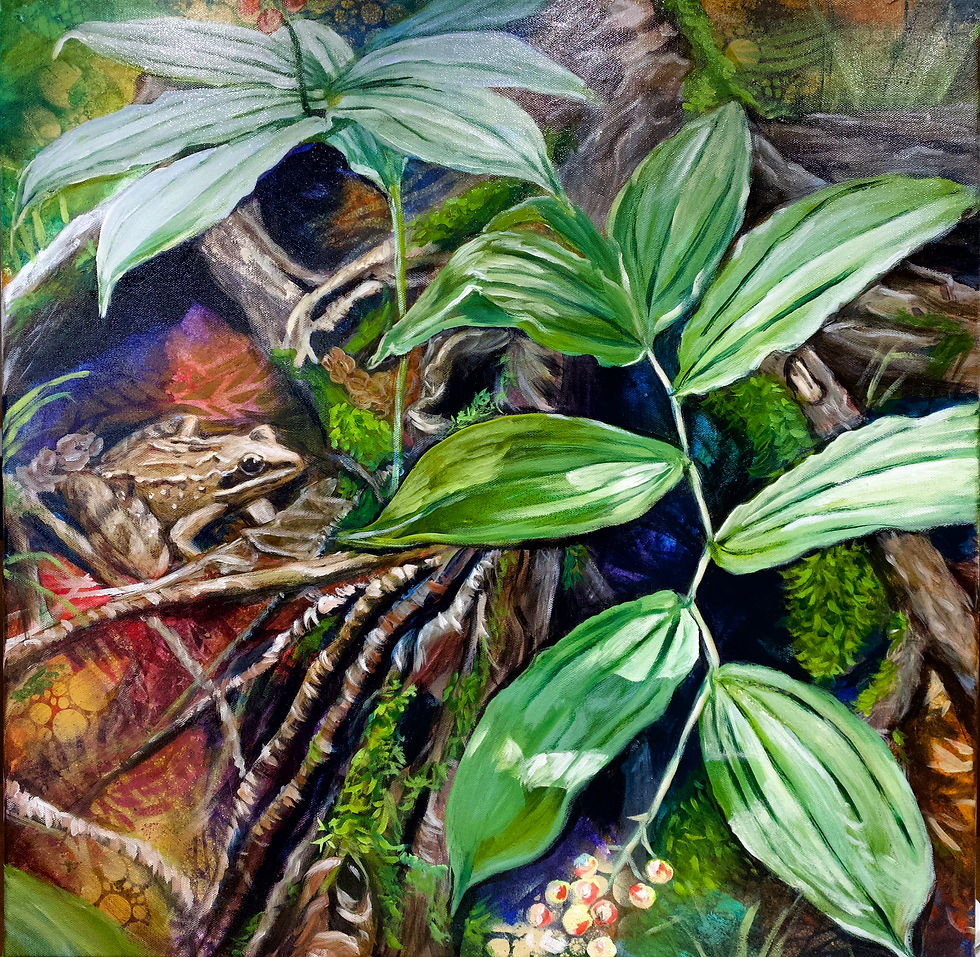
Wandering Wood Frog

original 24" x 24", acrylic and oil on canvas, $800
(original and limited edition signed prints are available in the store).
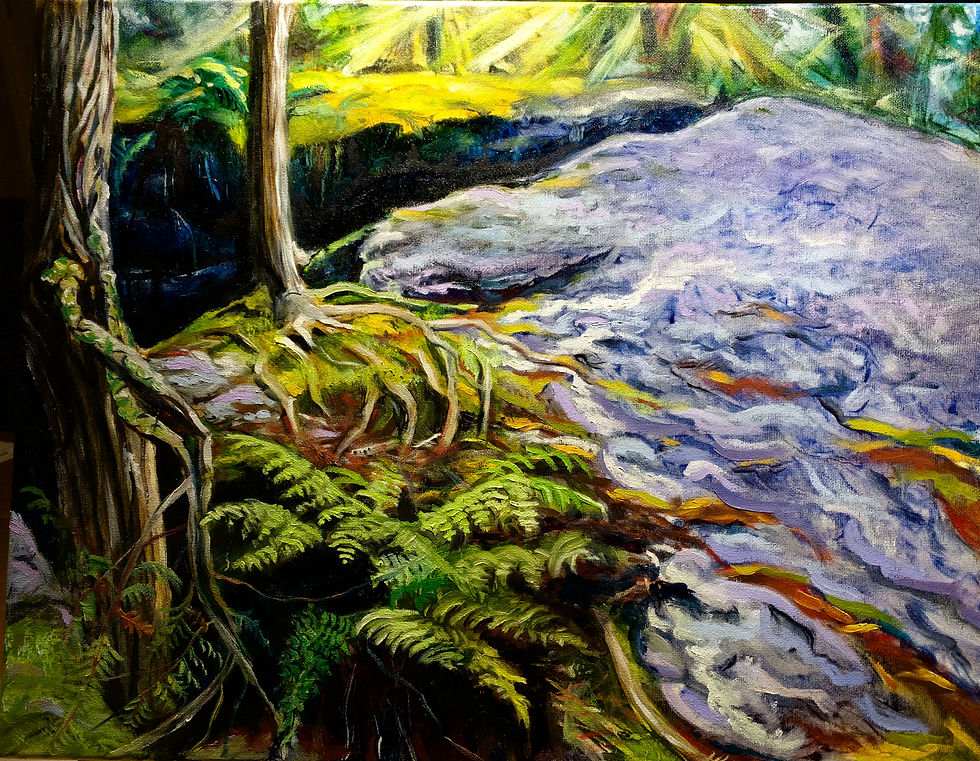
Wood frogs are the most terrestrial of the true frog family that we have in Ontario. Here we find one meandering through the forest camouflaged among roots of a cedar tree undertake foliage of false Solomon seal. Wood frogs are often found far from waterbodies because they have the ability to over winter in the forest with their anti-freeze hibernation physiology.
Sharing Shade

original 16" x 20", acrylic and oil on canvas, $800
(original and limited edition signed prints are available in the store).
Yellow lady's slippers bloom beneath the leafy canopy of wild sarsaparilla in this celebration of Ontario's woodland ecosystems.
Fun facts: the lady's slipper is a native orchid whose pouch-shaped flower temporarily traps visiting insects, helping ensure pollination. Wild sarsaparilla is unrelated to the tropical sarsaparilla used in old-fashioned root beer - but was named after the tropical plant because their roots were used a substitute by early settlers. Both have broad leaves that create cooling shade across the forest floor, supporting many plants that thrive in woodland conditions.
Nature reminds us that survival is often a shared story.
Spring reflections

original 11" x 14", acrylic and oil on canvas, $300
(original and limited edition signed prints are available in the store).
Caltha palustris, known as marsh-marigold is native to North American marshes and is one of the first flowers to bloom in the Canadian spring, and an essential early source of nectar for bees and other insects. Its waxy leaves contrast with vibrant yellow flowers that have UV patterns. The outer half of each petal reflects UV, while the inner portion absorbs it, creating a "bull’s-eye" nectar guide that directs pollinators to the flower's center. This plant thrive in the wetlands around our home in Douro, On. This photo was taken from Robert Johnston Forest.
..and yes, a green frog, Lithobates Clamitans, was hiding in the reflections - a beautiful moment to witness and bring to life in paint.
Basking in Spring

original 16" x 20", acrylic and oil on canvas, $480
(original and limited edition signed prints are available in the store).
There is no other feeling that can compare with the warmth of the sun in the early days of spring. As weather patterns becomes more extreme and less predictable, bees and other pollinators wake up before many wild flowers, so gardens can provide an essential source of nectar in the early spring. When my garden crocuses open, they are flooded with varieties from the 400 different Ontario bee species. The expression on this Happy Buddha garden statue, always seems to capture the bliss I feel when the world starts buzzing and vibrant colours return, after a long winter sleep.
Bloodroot found in the countryside

Original, 12"x16", oil painting with oil pastel highlights, $400 (sold). Limited signed prints also available for sale.
Bloodroot, Sanguinaria canadensis, is a fragile spring flower that rises from the center of its curled leaf, opening in full sun. Member of the Poppy Family, it’s flower is short lived, but it has surprising survival strategies and uses. The flower’s bright appearance lures native bees and flies inside looking for a sugary meal, but bloodroot flowers produce absolutely no nectar. While the insects get no reward, the plant gets pollinated. If the weather is too cold or cloudy for pollinators to fly, the flower will just self-pollinate. The unique red juice filling its stem can be used as a dye and insect repellant. This prized cluster was photographed in the artist’s garden.
Trout Lilies

Original, 12"x16", oil painting, $400 (sold).
Limited signed prints also available for sale.
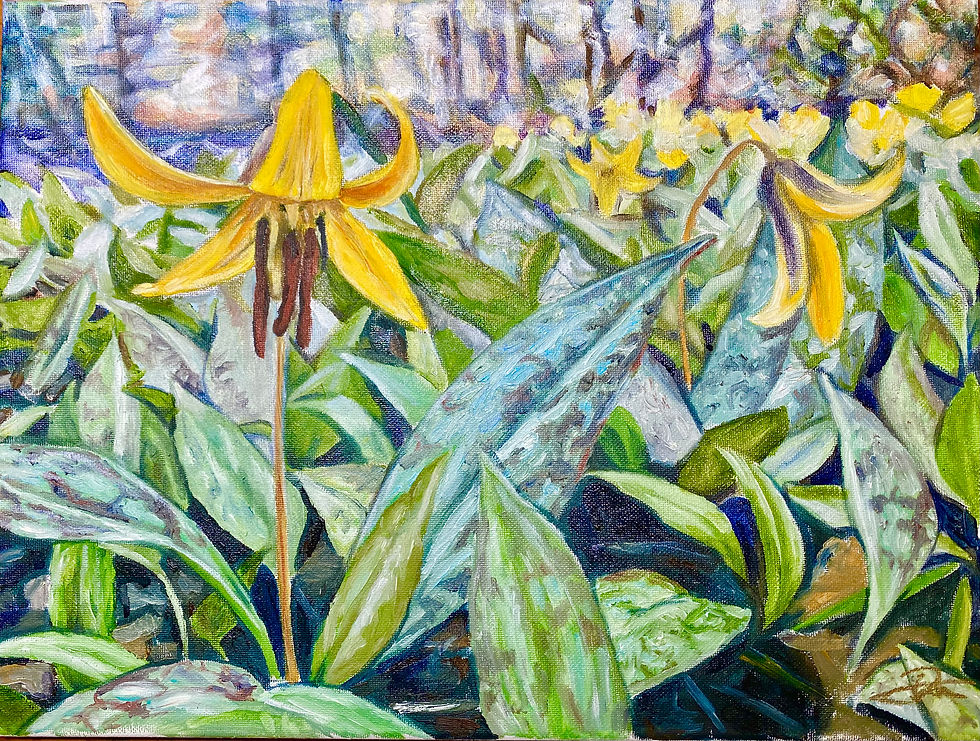
Trout Lilies, Erythronium americanum, are one of the first plants to flower in the spring. Trout Lilies carpet the forest floor and are recognized by its mottled foliage and delicate yellow lily flower. The Trout Lily has a symbiotic relationship with ants, feeding them with a lipid rich seed appendage, while ants help to spread their seeds underground. This cluster of trout lilies is located at the Douro Art Studios location.
Jill-in-the-pulpit

Original 16"x20", oil painting $450 (available). Limited signed prints also available for sale.
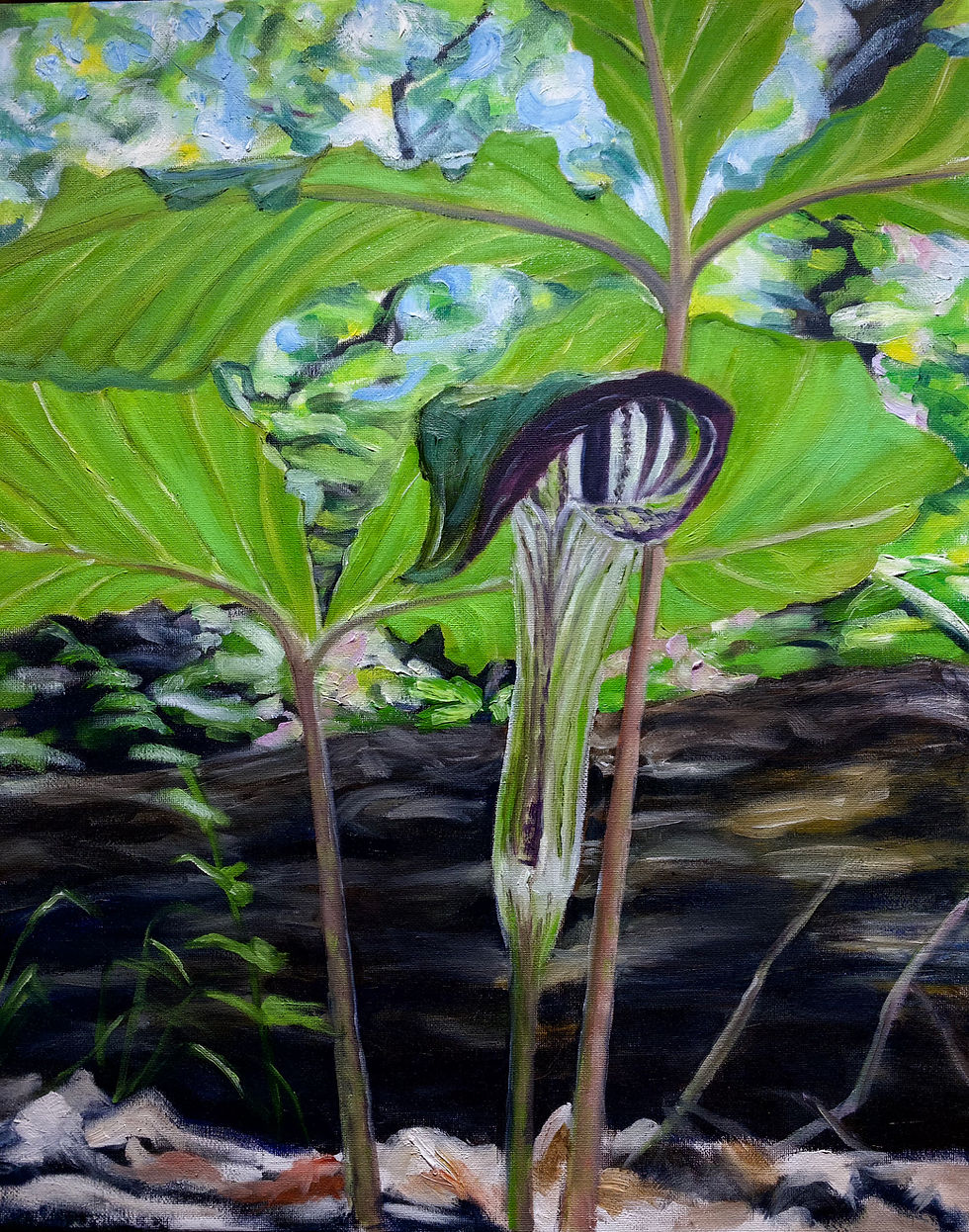
Jack (or Jill) -in-the-pulpits (Arisaema triphyllum) are pollinated by fungus gnats that fall into the flower and can escape through a hole in the flower of males but not the females, this is a rare Femme-fetal of the plant world (learn more here). To live up to its name, Jack-in-the-pulpits are also poisonous to humans but when cooked the bulbs (Indian turnip) can be eaten or ground into flour to be used medicinally relieving colds, fevers, and snake bites. While found in some regions of the maritimes and south western Quebec, this beautiful plant is mostly found in South parts of Eastern and Central Ontario - make sure to look under it's large leaves so you do not miss it in the late spring! Learn more about walking through Mark S. Burnham forest here. The forest is managed by Parks Canada.
Oatbox Forest - Maidenhair Ferns

original 20"x24", oil painting, $500 (sold). Limited edition signed prints are available for sale.
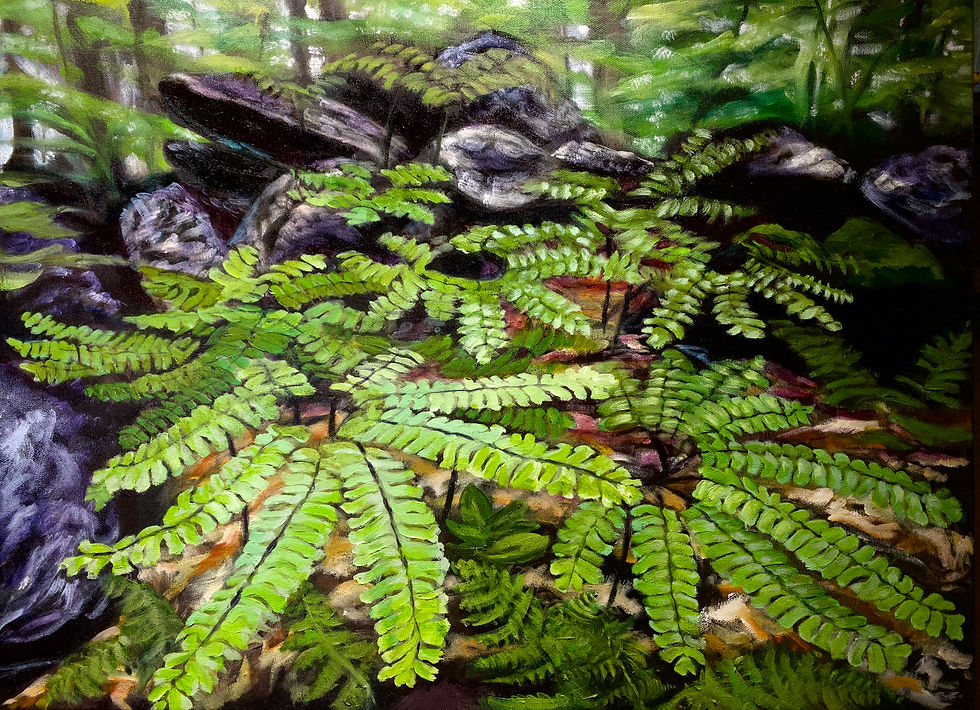
The maidenhair fern (Adiantum pedatum) is a graceful plant with a fan-like pattern, and is unique among Ontario native ferns. Used for medicinal purposes, they contain chemicals that help reduce swelling (inflammation). Maidenhair fern has been traditionally used for coughs, menstrual cramps (dysmenorrhea), wound healing, and other ailments. This maiden hair fern cluster is currently protected by the Otonabee Regional Conservation authority in the Oatbox Forest which is apart of the Otonabee Conservation Agreement Forest in the Kawarthas.
Spring Ephemerals

original 11"x14", acrylic and oil painting, $300 (original and limited edition signed prints are available in the store).
This ephemeral spring triad is essential to the Ontario forest. Wild leeks (ramps) and trout lilies carpet the forest floor, signalling the return of fresh, native foods. Rising above them, Trillium grandiflorum adds a luminous crescendo to this early‑spring symphony.
Northern Flicker

original 10"x20", oil painting, $300 (sold). Limited edition signed prints are available for sale.
The Northern Flicker is one of Ontario’s most striking woodpeckers, easily recognized by its spotted plumage and bright yellow underwings. Unlike most woodpeckers, flickers often forage on the ground, where ants make up much of their diet.
Warsaw Caves - Limestone Outcrop

Original 16"x20" oil painting, $450
(original and limited edition signed prints are available in the store)
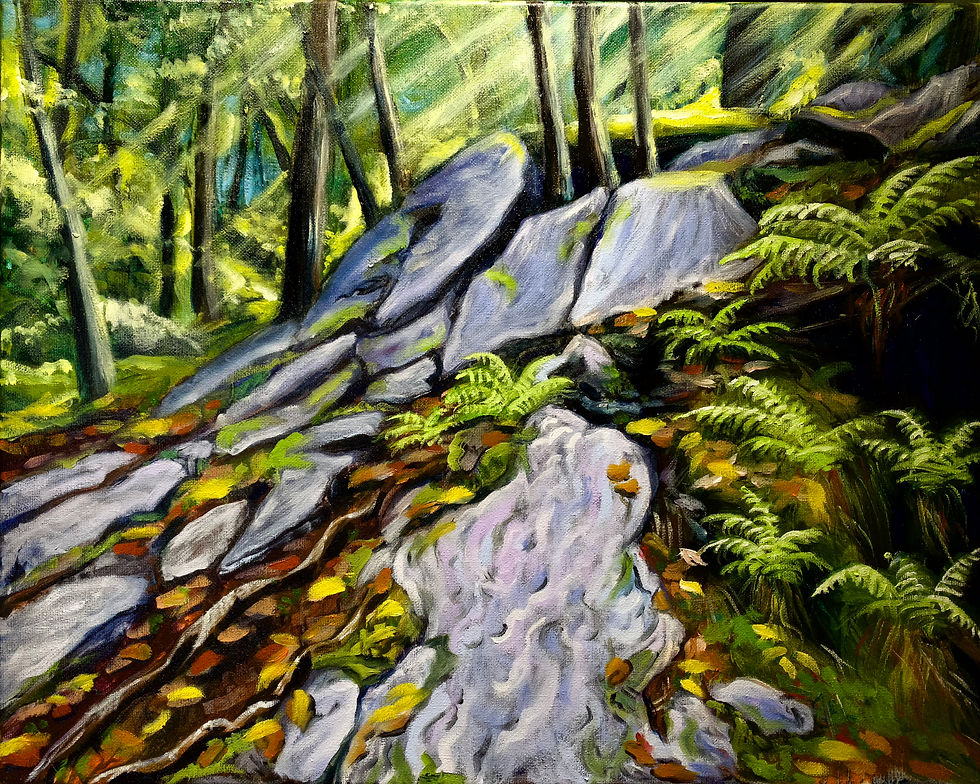
Limestone outcrops define the forest at Warsaw Caves. Managed by the Otonabee Regional Conservation Authority the Limestone caves creates a diversity of habitat for animals and spelunking opportunities for visitors. The cedar forest filled with ferns, mosses, and fungi, grows among and above the limestone plains which themselves are remnants of the Ordovician sea bed. It is hard to imagine life 400,000,000 years ago when we were on the warm sea bed, sitting south of the equator. Can you find any fossils in this painting?
Warsaw Caves - Fern forest

Original 16"x20", oil painting, $450 (available). Limited signed prints are also available for purchase in the store.
Ecologically, ferns are most common plants of shaded damp forests of both temperate and tropical zones (Britanica). Some fern species grow equally well on soil and upon rocks; others are confined strictly to rocky habitats, where they occur in fissures and crevices of cliff faces, boulders, and taluses. Wood ferns, walking ferns, and spleenworts can all be found at warsaw caves.
Snowdrops and Oak Leaves

original 9"x12", oil painting, $300 (sold). Limited edition signed prints are available for sale.
Snowdrops (Galanthus) emerge at winter’s edge, offering one of the season’s first gifts of nectar to early pollinators—a quiet bridge between scarcity and spring. Though not native, their resilience sustains life in a moment of need. Beneath them, fallen oak leaves tell a deeper story: oaks are keystone trees in Ontario, nurturing an extraordinary diversity of caterpillars, which in turn feed returning birds. Together, bloom and leaf mark the subtle threads that carry ecosystems from dormancy into renewal.
February Warmth

original 15"x30", oil painting, $600
(original painting, signed limited edition prints, and note cards are available in the store)
Winter light passes through pines at the edge of a frozen pond, stretching their blue-violet shadows across the snow-covered ice. Warmth and coolness meet in a fleeting moment of light, colour, and stillness.
Forest in Blue Light

original 11"x14", acrylic under oil painting, $200
(original painting, signed limited edition prints, and note cards are available in the store)
In winter’s blue light, the forest reveals another rhythm—one shaped by cold, shadow, and reflection. Snow gathers and softens the land, insulating roots and creating refuge for small creatures beneath its surface. Bare branches allow light to reach the forest floor, where it reflects in cool tones, extending the day in subtle ways that influence plant and animal cycles. In this season of reduced activity, energy is conserved, moisture is held, and life continues in hidden forms—an ecosystem sustained not by growth, but by balance, patience, and light.
Where Light Waits

original 11"x14", acrylic under oil painting, $450
(original painting, signed limited edition prints, and note cards are available in the store)
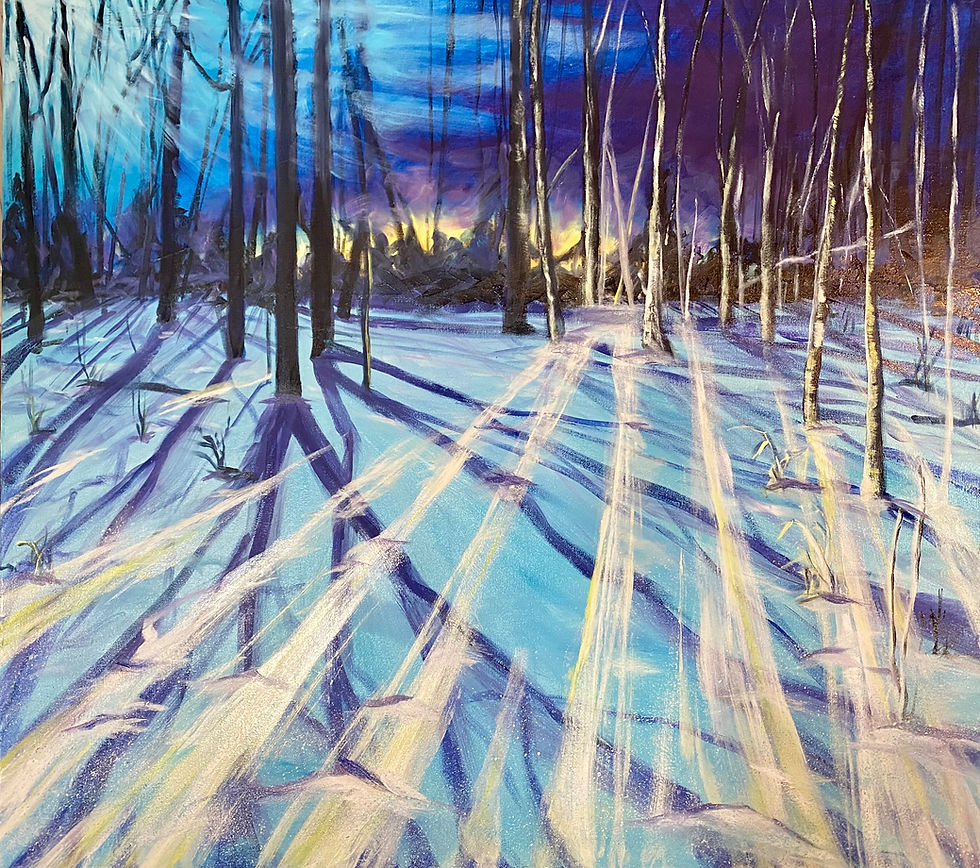
In winter, forests enter a season of quiet work. Beneath the snow, an insulated world forms—protecting plant roots, sheltering small creatures, and storing water that will nourish spring growth. Deciduous trees stand bare, conserving energy while their roots continue subtle exchanges with soil and fungi. The low sun casts long blue shadows, a reminder that even in dormancy, light shapes the forest. This stillness is not emptiness, but a vital pause—holding life in balance until the season turns.
Yellow American Blusher

original 8"x10", acrylic and oil painting, $100 (sold). Limited edition signed prints are available for sale.
Shaggy Mane

original 8"x10", acrylic and oil painting, $100 (sold). Limited edition signed prints are available for sale.
Winter Sunset 1

original 8"x10", oil painting, $100 (original sold - limited edition signed prints are available in the store)
Boletus and Scabbers

original 8"x10", acrylic and oil painting, $100 (sold). Limited edition signed prints are available for sale.
On the Waters Edge

original 16"x20", acrylic and oil painting, $480 (original and limited edition signed prints are available in the store).
Blanding’s turtles, recognized by their bright yellow throats and gentle expressions, are among Ontario’s longest-living reptiles—yet they face growing threats across the Kawartha wetlands. These turtles depend on a network of marshes, ponds, and upland nesting sites, often traveling long distances between them. Slow to mature and vulnerable to habitat loss and road mortality, their populations recover with great difficulty. As predators and scavengers, they help maintain balance in aquatic ecosystems. Protecting connected wetlands and safe nesting areas is essential, ensuring that these ancient, patient beings continue to inhabit the quiet waters they have belonged to for generations.
Winter Sunset 2

original 8"x10", oil painting, $100 (original sold - limited edition signed prints are available in the store)
Light Confusion

original 36" x 36", oil on canvas, $1500 (available)
"Light confusion" refers to the disruption of natural light patterns caused by excessive artificial light at night, also known as "light pollution," which can confuse animals and disrupt their natural behaviors like feeding, mating, and migration by mimicking or masking important light cues, often leading to disorientation and negative impacts on their survival and reproduction. The artist illuminates the issue and asks you to reflect on your own impact on your environment.
Pond Reflections

original 16"x20", oil painting, $480
(original and limited edition signed prints are available in the store)
Fragrant white water lilies and pickerelweed thrive in the quiet richness of wetlands, where water, light, and rooted plants create layered habitats. Lily pads shade the surface, helping to regulate temperature and limit algae growth, while their submerged stems provide shelter for fish, insects, and amphibians. Pickerelweed rises above the water, offering nectar for pollinators and structure for nesting and perching. Together, these native plants support a web of life—filtering water, stabilizing sediments, and sustaining biodiversity in one of the most vital and productive ecosystems in Ontario.
Red Columbine - Aquilegia canadensis

original 16"x20", oil painting, $400.
A member of the buttercup family, the beautiful red columbine has long tubular structures that store the precious nectar. This nectar has 2x the sugar content of regular nectar and can only be accessed by a few insects – including long-tongued sphinx moths (although some beetles cheat by biting through). When looking at this flower you can also expect that it is a food source for ruby-throated humming birds who also pollinate the plant, as the red and yellow colouring of the flower is mimicked by many hummingbird feeders. More information can be found on this USDS webpage.
Fern forest bed

Acrylic
Barred Owl in Winter

original 16"x20", oil painting, $480
(sold). Signed limited edition prints are available in the store)
Built for Canadian winters Barred owls can be seen in the leafless deciduous trees attempting to capture radiation from the winter sun. They have feathers that grow all the way to the tips of their toes to keep their feet warm, and specialized body feathers that trap extra heat. Mostly nocturnal you can see a barred owl during the day hunting - their asymmetrical ears allow them to use triangulation to pinpoint the exact location of prey, such as voles, moving underneath deep snow. Anytime of the year it is always a special moment when you can see this majestic owl in the wild.
Wild Creek

oil painting (available)
Melting Point

original 20"x24", oil painting, $550 (available). Limited edition signed prints are available for sale.
Spring at the meeting of two rivers and two cultures.
This spring shoreline marks a point of convergence—where two rivers meet and winter begins to loosen its hold. Ice still clings to one shore while open water gathers at the confluence, echoing the quiet negotiation between neighbouring regions. Neither boundary nor barrier, the river becomes a shared space where geography, season, and culture gradually soften and give way to movement.
Artist Statement
Tina Fridgen
My work grows from a lifelong love of the natural world and a belief that our well‑being is inseparable from the well‑being of the ecosystems around us. As a biologist and conservation artist, I approach the forest the same way I did in my earliest field studies—on my hands and knees, brushing aside leaves, looking under mosses, and paying attention to the quiet details most people step over. I want others to experience this same sense of discovery: the feeling of being fully present, fully connected, and fully alive in nature.
In my practice, I explore how art can act as a bridge back to the land. Through light, colour, texture, and immersive installation, I invite viewers to slow down and engage their senses—to look closely, breathe deeply, listen, and feel. I use materials that echo the vibrancy and subtlety of the forest, creating environments that evoke “micro‑habitat moments”: the glint of light on wet bark, the deep greens beneath a cedar bough, the quiet pulse of life underfoot.
At the heart of my work is a desire to inspire stewardship. When people reconnect with nature, even briefly, something shifts. They notice more. They care more. My goal is to help viewers cultivate the kind of intimate, sensory relationship with the land that biologists experience during fieldwork—one built on curiosity, affection, and reciprocity.
Ultimately, my art is an invitation: to kneel, to look closely, to listen, and to remember that we are part of a larger living community. Through this experience, I hope to nurture not only personal well‑being, but also a deeper sense of responsibility to protect the places that sustain us.


Explore the Collection
Some of my paintings may not appear in the store, if you are interested in purchasing paintings you can also email me at tinafridgen.douro@gmail.com or text 705-768-8403